 Cronometer
Cronometer counts up to 84 nutrients on its free plan, and the free plan includes a barcode scanner, which MyFitnessPal puts in Premium. We used the free plan on an iPhone in October 2026, and the screenshots here come from our account, with sample foods. We didn’t pay for Gold, so photo and voice logging are described from Cronometer’s own pages. If you’re choosing between Cronometer and another app, see Cronometer vs MyFitnessPal, Cronometer vs Lose It! or MacroFactor vs Cronometer.
Is Cronometer free? What Gold costs
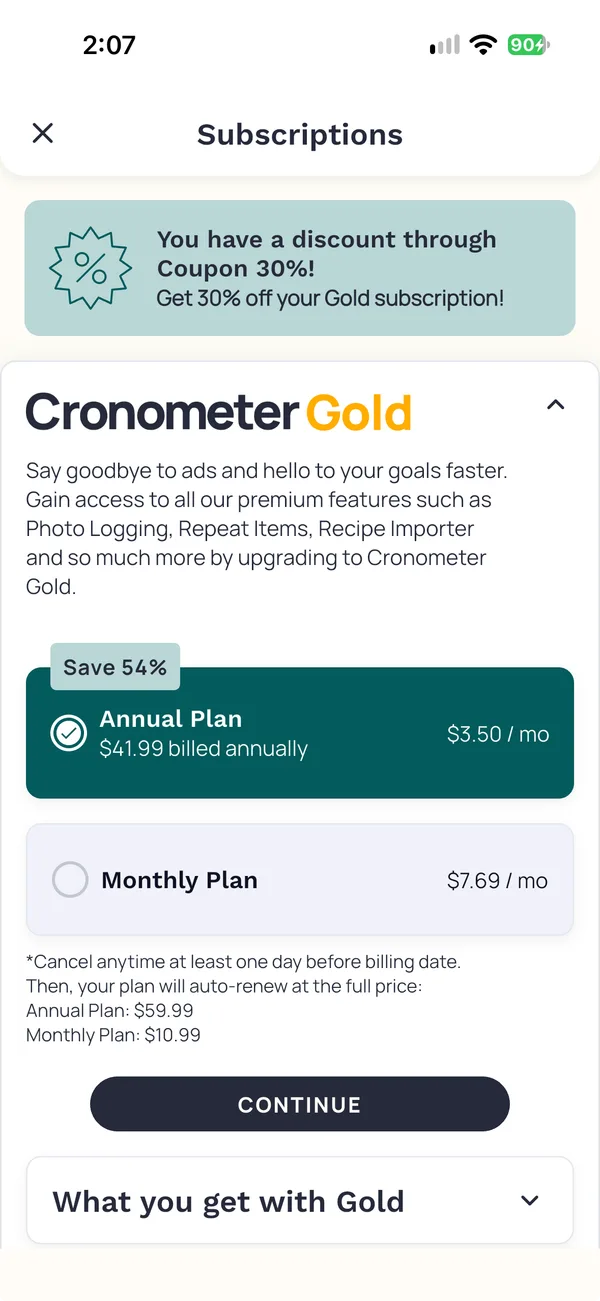
Yes. Basic is free, with ads. Gold costs $59.99 a year, or $10.99 a month. Cronometer doesn’t advertise a free trial of Gold.
On October 17, the app offered our account a 30% coupon on the first payment. With it, Gold costs $41.99 a year, or $7.69 a month. After the first year or month, Gold renews at $59.99 a year or $10.99 a month. Someone else may see a different offer.
Gold removes the ads and adds photo and voice logging, timestamps, reports over any date range, Target Scheduler and a fasting timer, among a longer list. Inviting a friend takes money off Gold for both of you.
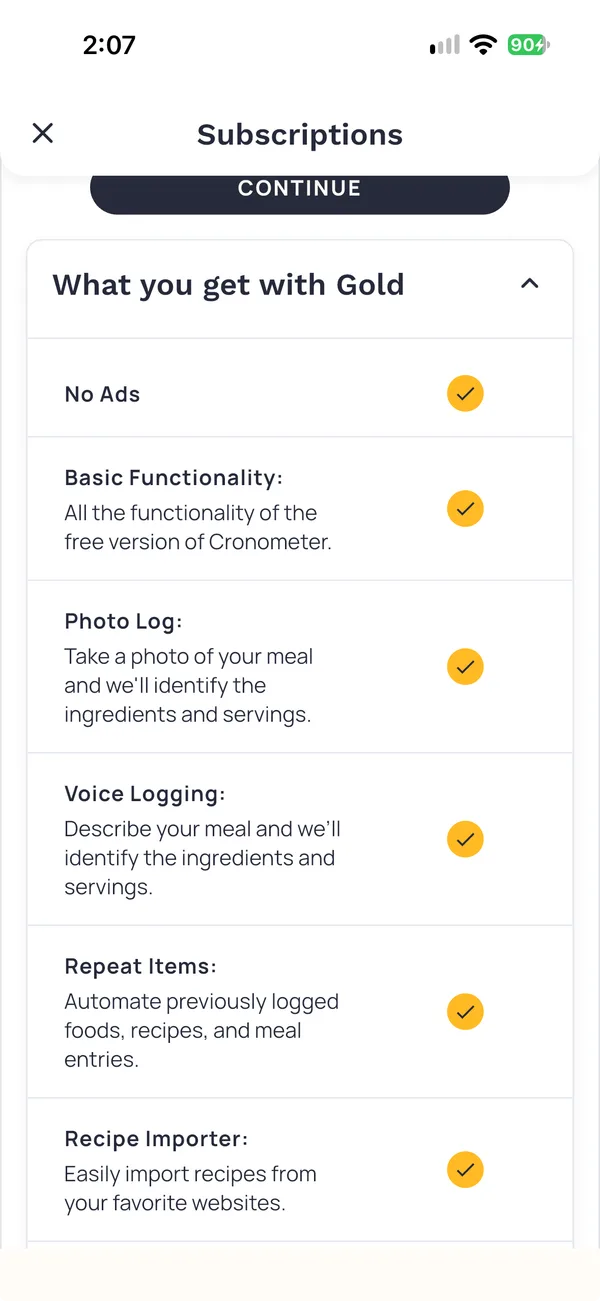
Free vs Gold: what the free plan leaves out
Basic logs food by search or barcode. Searching “bagel” listed plain foods first, each with its serving size and its source.
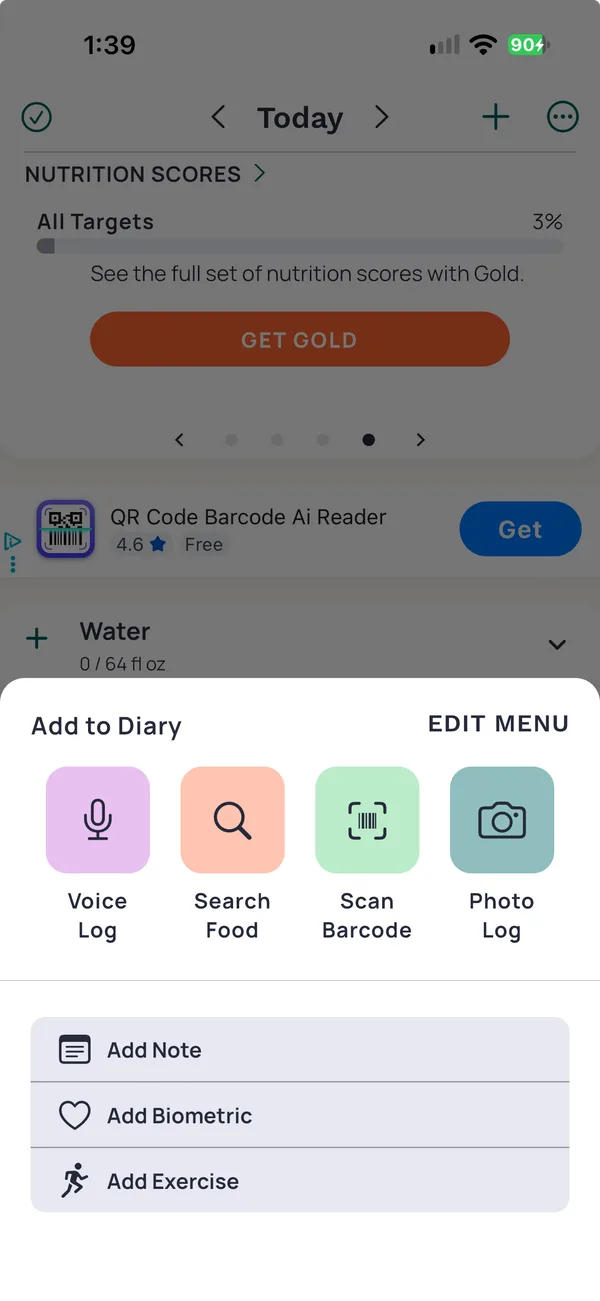
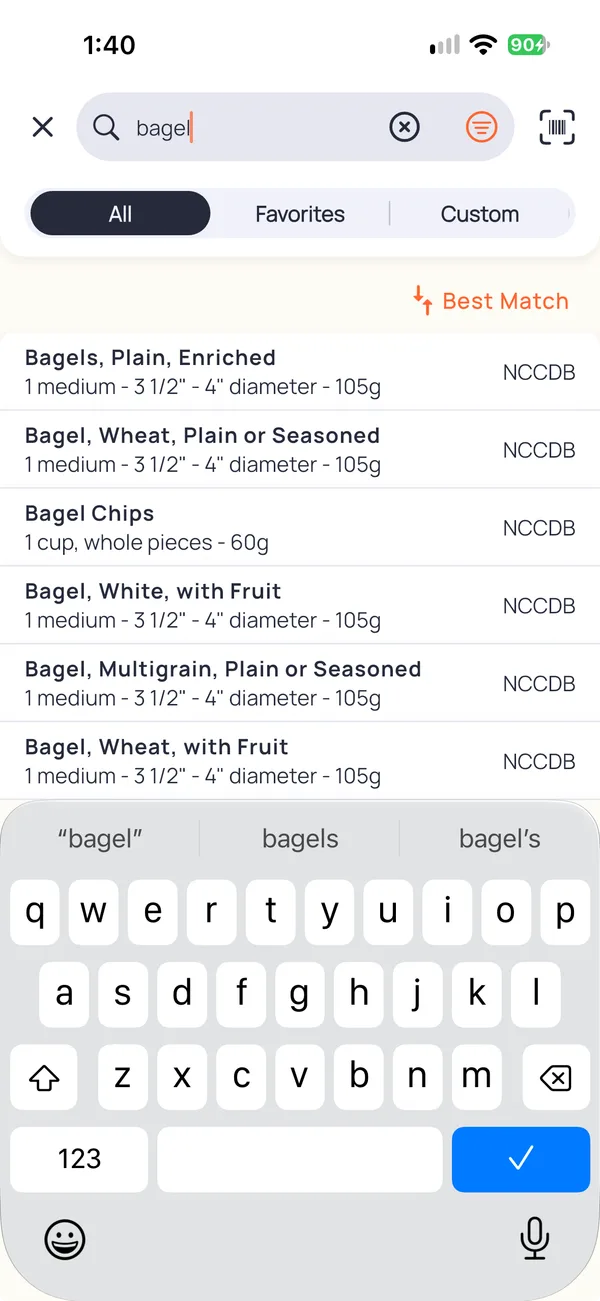
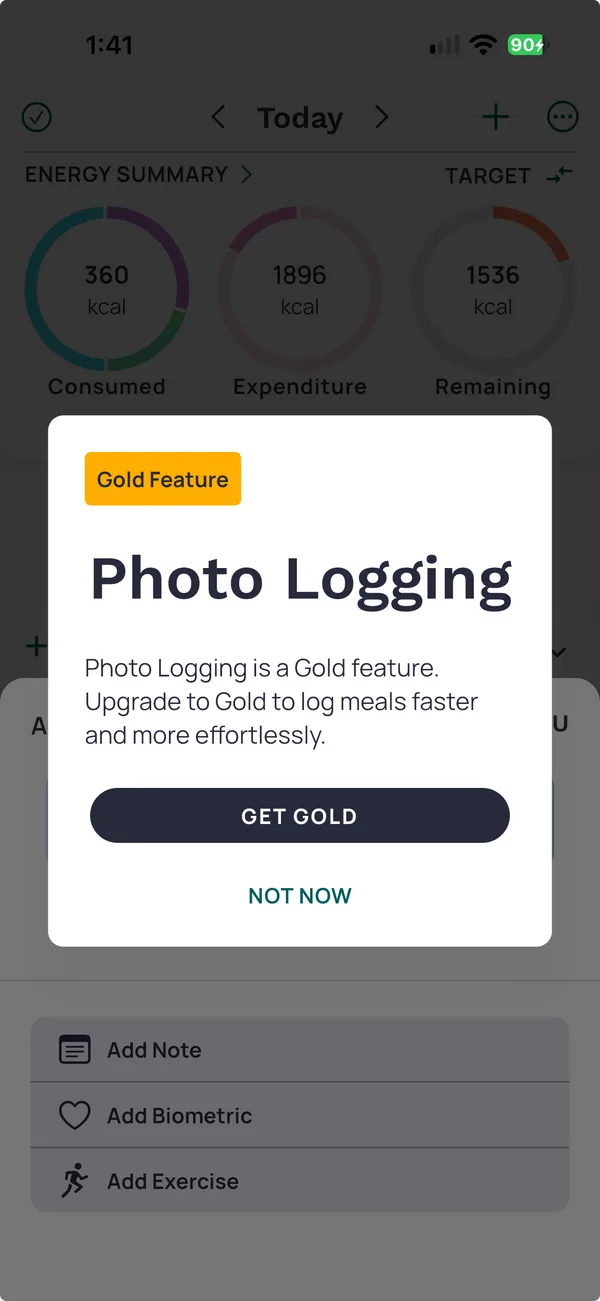
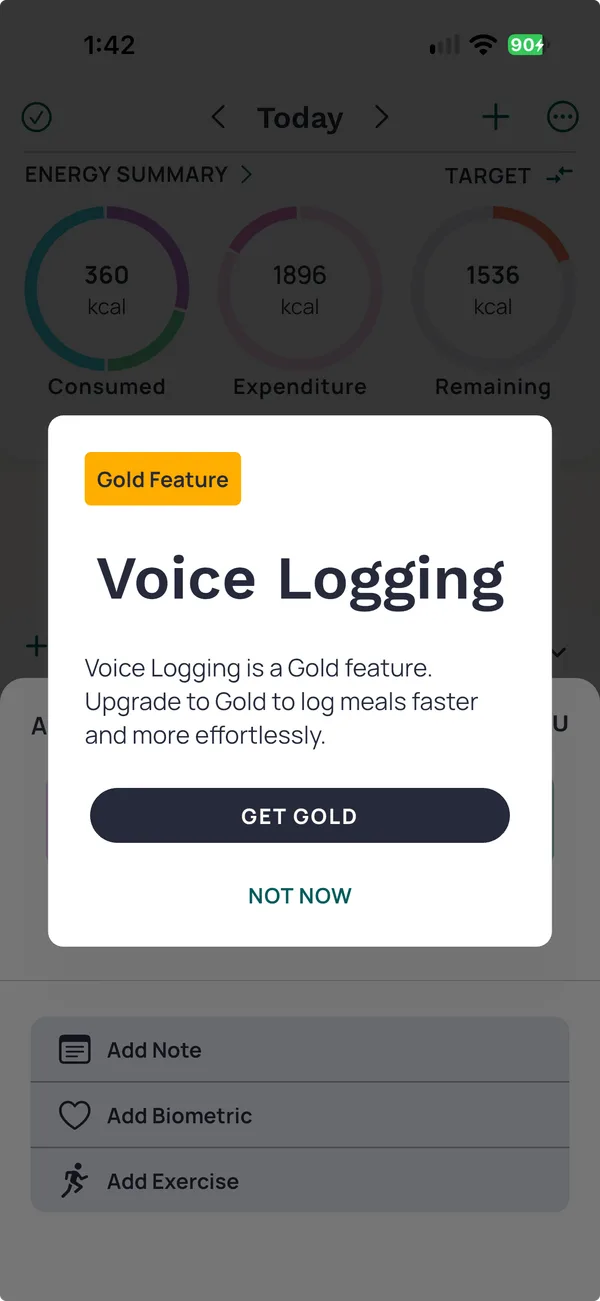
Photo Log and Voice Log are Gold. On the free plan, each opens a card that says so, with a Get Gold button. In Gold, Photo Log uses your photo to suggest foods from Cronometer’s database, and you choose the right ones before you log.
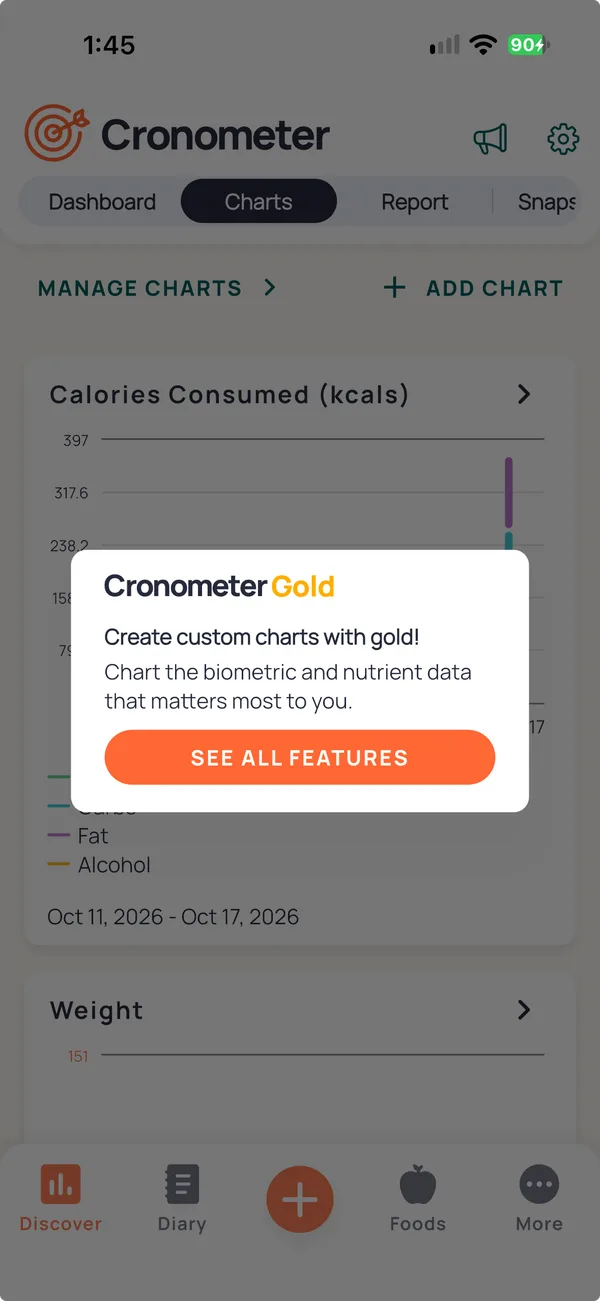
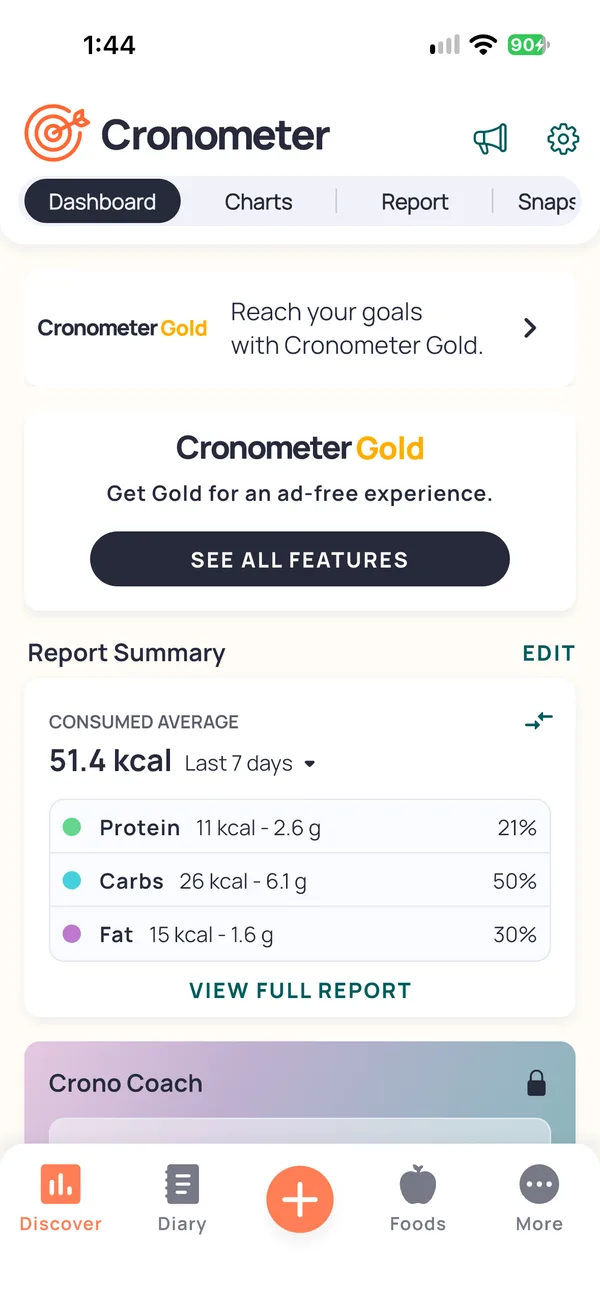
Reports and charts cover the last 7 days on Basic. Gold’s More Insights shows them “over any time frame”. In the report we saw, the average counted the six days we hadn’t logged, so one day of 360 calories showed as 51.4 a day. If you skip days, the averages run low.
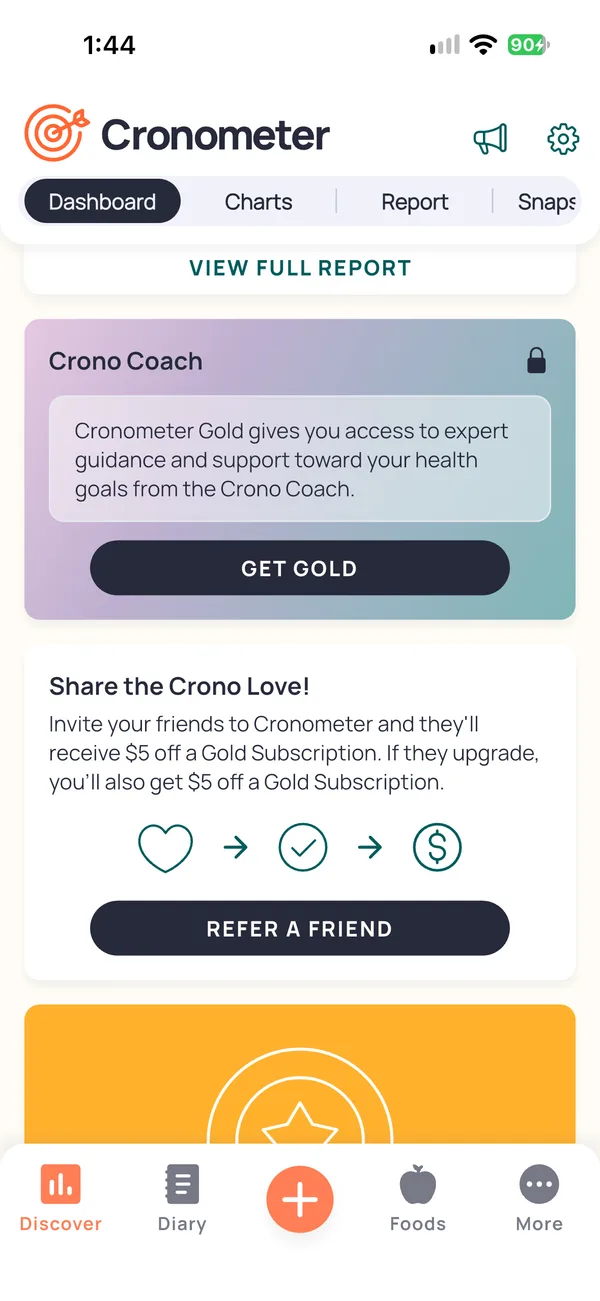
Custom charts, nutrition scores and Crono Coach are Gold too. Crono Coach, in Cronometer’s words, gives you “expert guidance and support toward your health goals”.
Cronometer’s ads
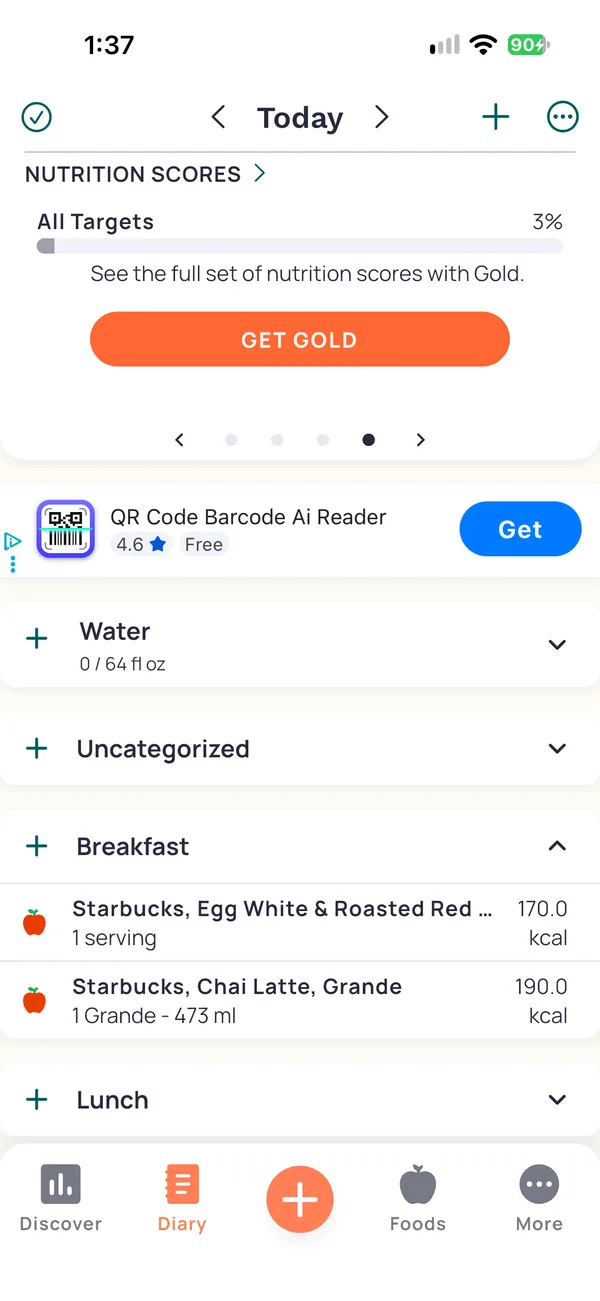
The free plan shows ads. In our diary, a banner sat under the cards, first for Peacock’s NBA coverage and then for a QR code reader app. We also got a 30-second full-screen video ad for TikTok Shop. The Discover tab offers “Get Gold for an ad-free experience”, and Gold’s list of features starts with No Ads.
How accurate is Cronometer’s food data?
How much detail you get depends on where a food’s data comes from. Cronometer can track up to 84 nutrients on the free plan, but each food fills in only what its source has, and shows the count near the top as Listed Nutrients. A wheat bagel from USDA listed 35, with values for most B vitamins, folate and every mineral. Starbucks egg bites from CRDB listed 10, the numbers on a nutrition label. Every vitamin read No Data, and so did every mineral but sodium. A protein bar, also from CRDB, listed 16.
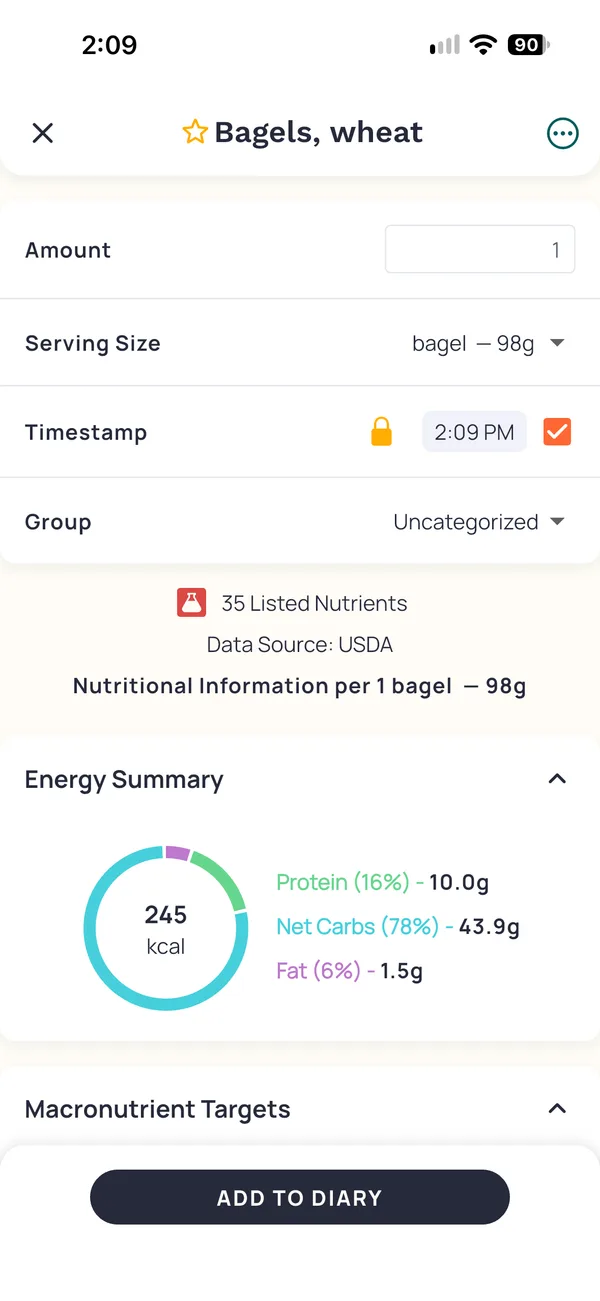
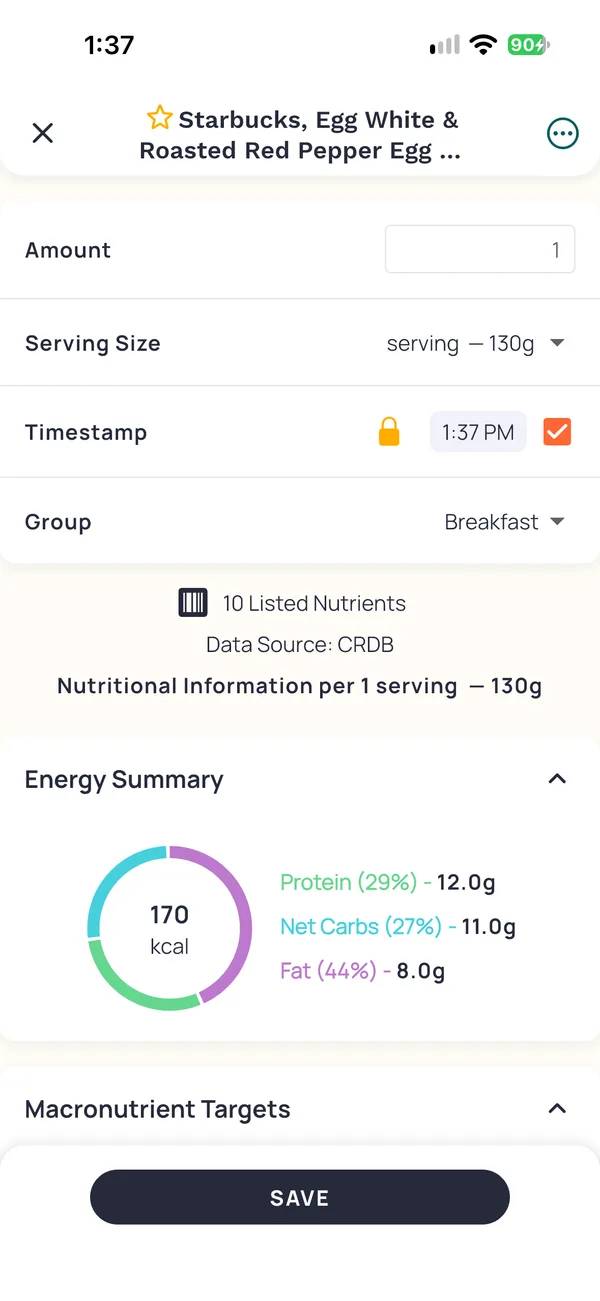
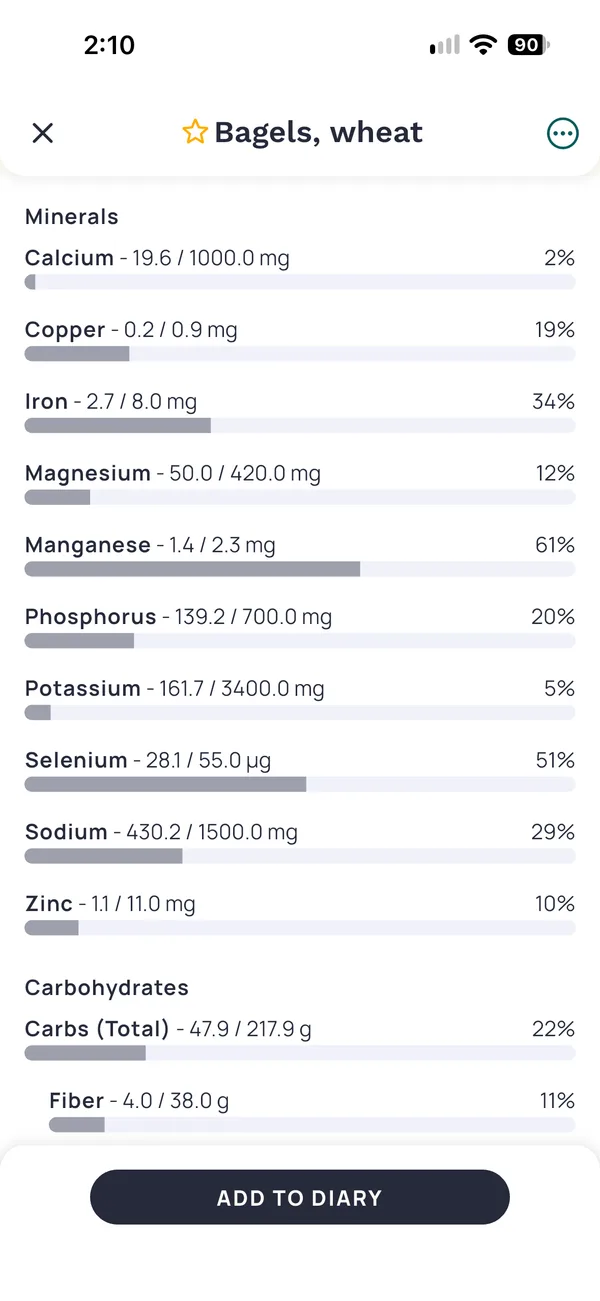
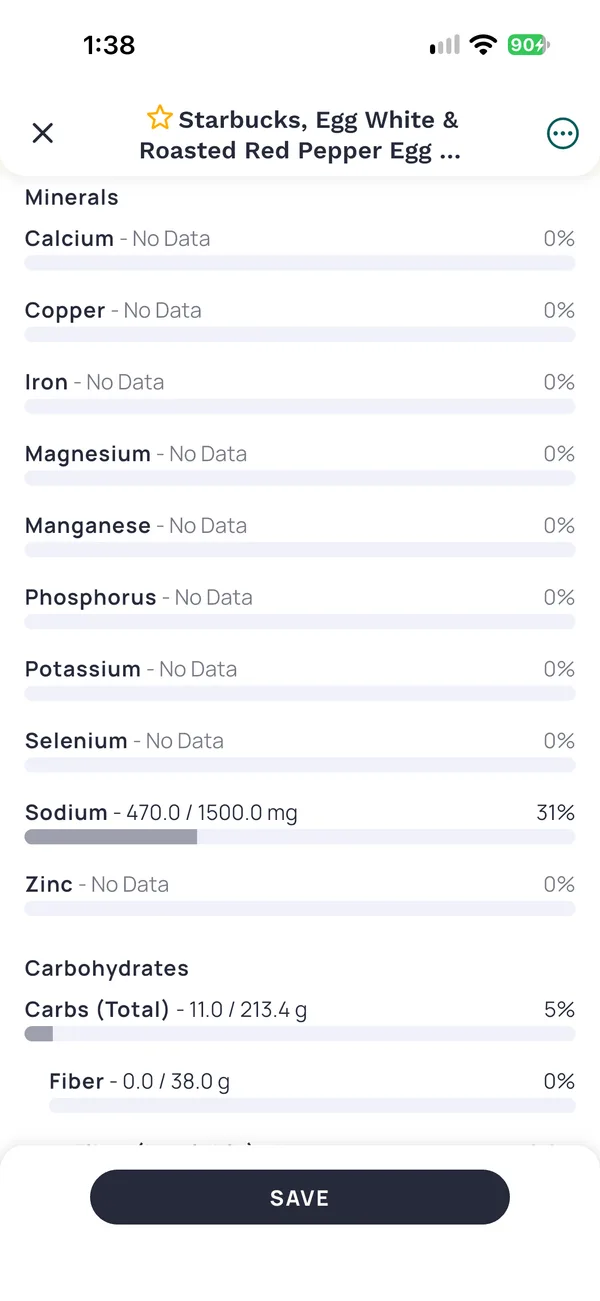
No Data counts as nothing toward your targets. So a day of packaged and restaurant foods can look short on vitamins and minerals the food actually had. If micronutrients are why you use Cronometer, check the count before you log a food.
Every food names its source. Our search for bagel listed entries from NCCDB, the University of Minnesota’s Nutrition Coordinating Center database, and the search filter adds national databases from Canada, Ireland, the UK, the Netherlands and Australia. Cronometer says its “nutrition information is sourced from lab-analyzed data, not crowd-sourced guesses”, and that branded foods go through “a verification process”. CRDB, the source for both packaged foods we looked at, isn’t on its list of sources.
For the calories and macros themselves, one 2025 study had two researchers log the same food records in Cronometer and MyFitnessPal. Cronometer’s totals stayed close to a reference database, and the two researchers’ totals agreed closely. It’s a small study, and it measures consistency, not how close the app gets for your own meals.
Targets you set yourself
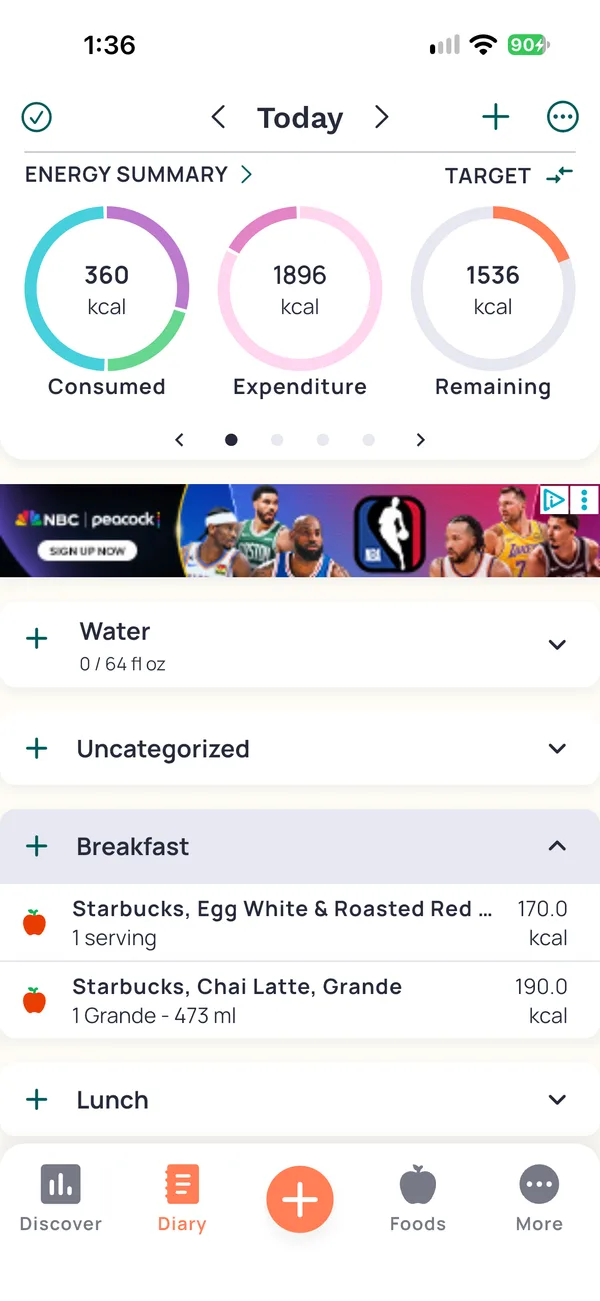
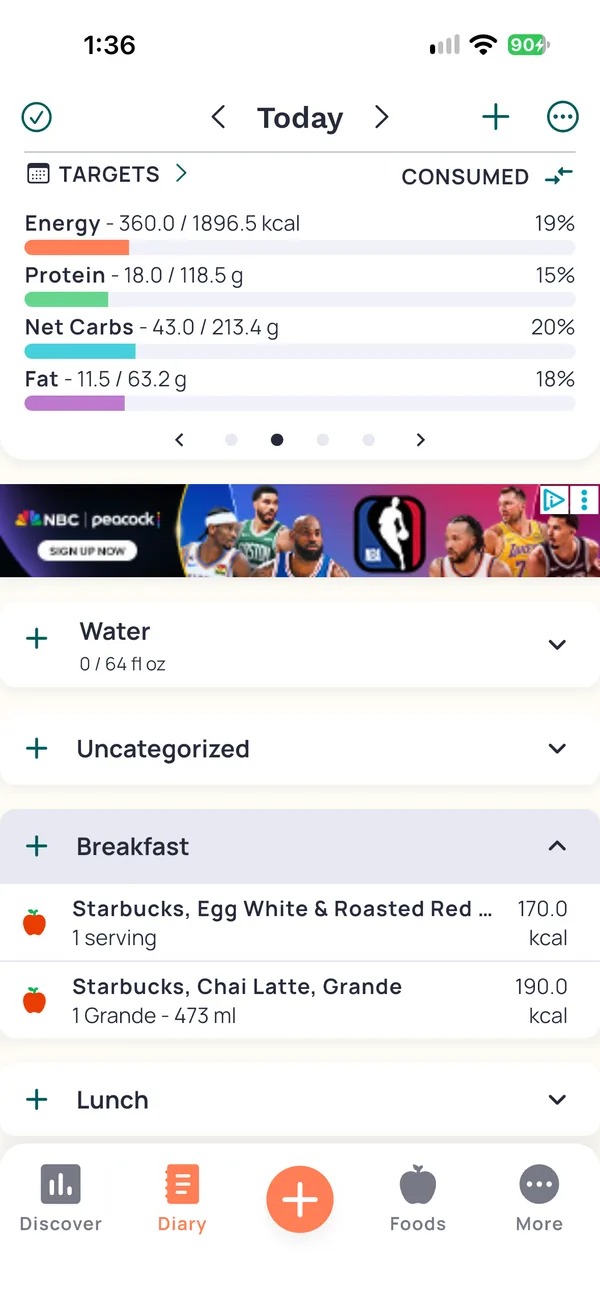
Cronometer sets a calorie target from the profile you fill in when you join, and splits it into protein, net carbs and fat. The diary shows them in cards above your foods, with calories eaten, burned and left, and a bar for each macro. Exercise you log raises the day’s target. You can set your own target for each macro and nutrient on the free plan, and Gold’s Target Scheduler sets different macros for each day of the week. Cronometer doesn’t work out what you burn from what you eat and weigh, the way an adaptive app does.
Taking your data with you
Cronometer exports your data as CSV files on any plan, from Account Settings on its website. It runs on iPhone, Android and the web, and Connect Apps & Devices, under More, links it to trackers and health apps. Cronometer documents no way to import a MyFitnessPal diary.
Where Fit Shapes fits
Cronometer’s free plan is generous with detail, but it shows ads, and photo and voice logging need Gold. It doesn’t adjust your targets from what you eat and weigh.
If you’d rather log less by hand, Fit Shapes works differently. A photo logs the meal instantly, and every subscription includes photo, voice and barcode logging. Each week, Adaptive Targets proposes new targets from what you eat and weigh. It tracks vitamins and minerals too. It has no ads and doesn’t sell your data. It also imports your data from Cronometer. So if you decide to switch, you can bring your history with you.
The catch is that Fit Shapes has no free plan, while Cronometer’s free plan includes barcode scanning and detailed nutrients. After the 14-day free trial, you pay for a subscription.
Questions
Is Cronometer free?
Yes. Basic is free, with ads, and includes the barcode scanner and up to 84 nutrients. Gold removes the ads, adds photo and voice logging, and shows reports over any date range.
How much does Cronometer cost?
Basic is free. Gold costs $59.99 a year, or $10.99 a month. In October 2026, our account was offered 30% off the first payment.
Is Cronometer Gold worth it?
It is if ads bother you, or you want photo and voice logging, timestamps, or reports longer than 7 days. If you log food and check your nutrients for the week, Basic covers it.
Is Cronometer accurate?
Its data is most detailed for foods from sources like NCCDB and USDA. In a 2025 study, Cronometer’s totals stayed close to a reference database, and two people logging the same food agreed closely. A packaged food can carry only its label, so its vitamins and minerals can read No Data.
Does Cronometer have ads?
Yes, on the free plan. We saw banner ads in the diary, and a 30-second full-screen video ad. Gold removes them.
Does Cronometer’s free version have a barcode scanner?
Yes. Scan Barcode is free on Basic.
Does Cronometer have photo logging?
Yes, in Gold. Photo Log suggests foods from Cronometer’s database, and you choose the right ones. On the free plan, it opens an offer to upgrade.
Does Cronometer have a free trial?
It doesn’t advertise one for Gold. Basic is free, so you can try the app before you pay.
What is Cronometer?
A food and nutrition tracker for iPhone, Android and the web. It logs food, exercise and biometrics, and tracks up to 84 nutrients on its free plan, from databases like NCCDB and USDA.
Sources
8 sources
- Cronometer, cronometer.com/, checked October 14, 2026
- Cronometer, cronometer.com/gold/, checked October 14, 2026
- Cronometer, fitshapes.com/compare/cronometer-review/gold.webp, checked October 17, 2026
- Cronometer, cronometer.com/blog/photo-logging/, checked October 14, 2026
- Cronometer, support.cronometer.com/hc/en-us/articles/47549391461780-Mobile-Voice-Logging, checked October 15, 2026
- Cronometer, cronometer.com/blog/how-to-use-the-barcode-scanner/, checked October 14, 2026
- Cronometer, support.cronometer.com/hc/en-us/articles/360018760151-Account-Settings, checked October 14, 2026
- Cronometer, cronometer.com/features/accurate-databases.html, checked October 14, 2026